Broken Storm: The Quirky Display Font with Serious Versatility
There's a moment in every design project where you need type that does more than just sit there looking pretty. You need something with personality—something that grabs attention without screaming, that feels distinctive without being distracting. That's the sweet spot where Broken Storm lives. This isn't your typical display font trying too hard to be edgy or your safe corporate typeface blending into the background. Broken Storm occupies that rare middle ground: it's got enough character to make people pause and notice, but enough restraint to work across dozens of different contexts without feeling out of place.
What Makes This Typeface Stand Out
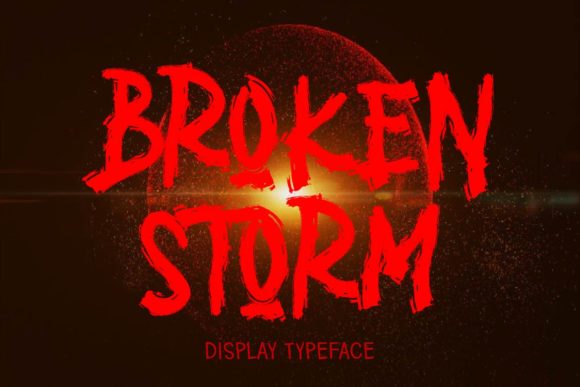
Broken Storm carries a subtle quirkiness in its letterforms that gives it immediate visual interest. The slightly irregular proportions and unexpected details create a sense of handcrafted authenticity—like someone actually drew each character with intention rather than letting an algorithm generate uniform shapes. This quality makes it feel approachable and human, which is exactly what many brands and projects need right now in a landscape saturated with sterile, overly-polished design.
What's particularly useful about this premium font is how it bridges different aesthetic worlds. It doesn't fit neatly into one category, which sounds like a limitation but actually becomes its greatest strength. Need something that feels modern but not cold? Broken Storm handles that. Want typography with personality that doesn't veer into novelty territory? It works there too. This flexibility means you're not constantly switching between typefaces as your project evolves—you can rely on one font family to carry different moods depending on how you deploy it.
Where Broken Storm Actually Works in Practice
Let's get specific about applications, because that's where a font either proves its value or falls apart. For logo design, Broken Storm offers enough distinctiveness to become a recognizable brand mark without relying on heavy styling or effects. The inherent character in the letterforms means your logotype already has visual interest built in, which gives you more breathing room in the rest of your brand identity system.
In packaging design, this typeface really comes alive. Think about shelf presence—products have roughly three seconds to communicate their personality and attract the right buyer. Broken Storm's quirky-yet-readable quality helps products stand out while still feeling trustworthy. It works beautifully for artisan food brands, craft beverages, boutique cosmetics, or any product where you want to signal creativity and quality without looking mass-produced.
For social media graphics, the font solves a common problem: how do you create thumb-stopping content that doesn't rely on the same tired typefaces everyone else is using? Broken Storm gives your quotes, announcements, and promotional posts a distinctive voice that cuts through the noise. It pairs well with both photography and illustration backgrounds, making it versatile enough for varied content calendars.
Editorial design and web design benefit from using Broken Storm as a headline or accent typeface. Pull quotes, section headers, and featured content titles gain immediate visual hierarchy when set in this display font. The key is knowing when to deploy it—reserved for moments where you want to draw the eye rather than using it for body copy where readability at smaller sizes becomes critical.
Matching Typography to Your Project Goals
Choosing a font shouldn't start with "I like how this looks." It should start with "what does this project need to communicate?" If you're designing for a creative agency, a boutique hotel, or an independent publisher, Broken Storm's personality aligns naturally with brands that value authenticity and individuality. For a law firm or medical practice? Probably not the right fit—and that's perfectly fine. No single typeface works for everything.
Here's a practical approach: before selecting any font, write down three to five adjectives that describe your project's personality. Words like "approachable," "creative," "confident," "playful," or "sophisticated." Then evaluate whether the typeface reinforces those qualities. Broken Storm tends to land in the "creative-confident-approachable" zone, which covers a surprisingly wide range of real-world applications.
Consider your audience carefully. A millennial-focused wellness brand, a craft brewery, an indie bookshop, a photography portfolio, a creative blog—all of these audiences respond positively to typography that feels genuine rather than corporate. They've developed visual literacy from years of scrolling through well-designed content, and they notice when brands make thoughtful typographic choices.
Getting the Most from Font Pairings
Broken Storm works best when you give it room to breathe as your primary display typeface. Pair it with a clean sans serif for body text—something with good x-height and straightforward letterforms that won't compete for attention. This contrast creates visual rhythm: the headline grabs interest, the body text delivers information clearly.
For projects with more editorial scope, you might pair it with a simple serif font for longer passages. The key principle is contrast without conflict. You want your typefaces to feel like they belong in the same family conversation but clearly serve different roles. Test your pairings at actual sizes, not just in your design software's preview window. A combination that looks balanced at 72pt might feel completely different when you're reading a paragraph at 14pt on a phone screen.
Don't overlook the value of pairing Broken Storm with itself at different weights or styles, if available. A bold weight for headlines with a regular weight for subheadings creates cohesion while maintaining hierarchy. This approach simplifies your design system and strengthens brand recognition because audiences associate one consistent typographic voice with your content.
Practical Considerations Before You Commit
Before building an entire brand system around any font, test it thoroughly. Set real content—not just "Lorem ipsum"—in the typeface. Does your actual business name look balanced? Do your typical headlines maintain readability? How does it render across different devices and screen sizes? Broken Storm's character details should remain visible and intentional whether viewed on a Retina display or printed on a business card.
Review what's included in the font package. Most quality display fonts come with multiple styles—regular, bold, italic, condensed—along with special characters, ligatures, and extended language support. Understanding the full scope of what you're working with prevents mid-project surprises where you need a weight or character that doesn't exist.
Commercial licensing matters more than most people realize. If you're using this typeface for client work, merchandise, digital products, or any project where money changes hands, verify that the license covers your intended use. Most premium font licenses distinguish between personal and commercial use, and some have specific terms for embedding in digital products or using on merchandise. Read the license agreement—those ten minutes of reading save you from potential legal headaches down the road.
Making It Part of Your Design Toolkit
The best typography decisions happen when you build a small, intentional library of fonts rather than collecting hundreds you'll never use. Broken Storm earns its place in a designer's toolkit as that reliable creative workhorse—distinctive enough to bring personality to a project, versatile enough to work across different industries and mediums. Whether you're crafting a brand identity system, designing marketing assets, or building a visual presence for your own business, having a typeface that carries genuine character without sacrificing functionality changes how efficiently you can produce work that actually connects with people.
Typography is ultimately about communication. Every font choice either supports your message or works against it. Broken Storm supports messages that need warmth, authenticity, and a touch of creative confidence—which, when you think about it, covers far more ground than you might initially expect from a single display typeface.