Dashed Line: The Display Font That Breaks the Mold
Every designer has been there. You're staring at a blank canvas, a new project brief in hand, and you know the typography needs to do more than just convey words—it needs to tell a story. You scroll through endless libraries of elegant serifs and clean sans-serifs, but they all start to blur together. What you need is something with personality, something that immediately catches the eye and creates a distinct visual rhythm. This is where a unique display font like Dashed Line enters the scene, not as a replacement for your workhorse typefaces, but as a powerful tool for moments that demand a creative spark.
More Than Just a Broken Stroke
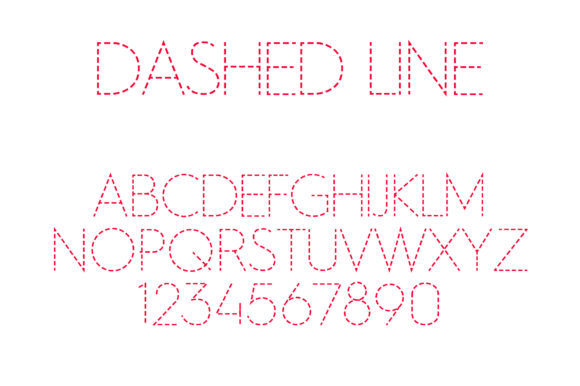
At first glance, Dashed Line is exactly what its name suggests: a typeface constructed from segmented strokes, giving each letterform a built-in, textured appearance. But its appeal goes far deeper than a simple novelty effect. The true genius of this premium font lies in its inherent versatility and the specific visual language it creates. Unlike a solid, uniform letter, the dashed construction introduces a sense of movement, craftsmanship, and modernity. It feels both technical and artistic, making it a fascinating choice for a wide array of creative projects.
The visual characteristics of Dashed Line make it particularly effective for specific goals. The broken lines create a lighter visual weight than a fully solid display font, allowing it to command attention without overwhelming a layout. This quality makes it excellent for headlines, logos, and featured text where you want to inject energy and uniqueness. It pairs surprisingly well with both serif fonts for a classic-meets-contemporary contrast and with clean sans-serif fonts to let its quirky personality shine. Think of it not as your primary body text font, but as the star player you bring in for key moments.
Where Dashed Line Truly Shines: Practical Applications
Understanding a font's personality is one thing; knowing where to apply it is what turns a good design into a great one. Dashed Line isn't for every situation, but in the right context, it can elevate a project from forgettable to memorable. Its modern typography feel makes it a natural fit for brands and creators looking to project innovation and approachability.
For logo design and brand identity, this typeface offers a fantastic opportunity to build a unique visual signature. A tech startup, a creative agency, a modern café, or a boutique fitness studio could use Dashed Line to craft a wordmark that feels dynamic and full of character. It communicates that the brand is forward-thinking, detail-oriented, and not afraid to break from tradition. The same principle applies to packaging design. Imagine the product name or a key slogan on a box or label rendered in this font—it immediately suggests something handmade, crafted, or uniquely engineered.
In the digital realm, the applications are equally compelling. Social media graphics live and die on stopping the scroll. Using Dashed Line for a bold headline on an Instagram post or a Pinterest pin can be the difference between being swiped past and being engaged with. It adds instant visual interest to otherwise static text. For websites and blogs, it can be used strategically for hero section titles, section headers, or call-to-action buttons to guide the visitor's eye and reinforce brand personality. Similarly, in editorial layouts for magazines or digital lookbooks, it can create striking pull quotes and chapter titles that demand attention.
Don't overlook the physical world, either. Print materials like posters, flyers, and business cards benefit from its high-impact style. It’s perfect for event posters, sale announcements, or any print collateral where you need to make a bold statement. For merchandise like t-shirts, tote bags, and mugs, Dashed Line provides a trendy, graphic look that appeals to a modern audience. Even formal projects like invitations can use it for a contemporary twist, especially for events like product launches, art shows, or modern weddings.
Integrating a Creative Font into Your Workflow
Adding a new creative font to your toolkit is exciting, but a strategic approach will yield the best results. Start by reviewing all the included font styles and weights. Does the Dashed Line family include light, regular, and bold versions? Understanding the full range of options allows you to use it more flexibly across a single project, maintaining consistency while creating hierarchy.
Next, think about font pairing. This is where the magic happens. A font with as much character as Dashed Line needs a partner that complements without competing. A great rule of thumb is to pair it with a simple, highly readable serif or sans-serif for body text. For example, a classic serif like Lora or a neutral sans-serif like Inter can provide a stable, readable foundation, allowing your Dashed Line headlines to pop. Always test your pairings in context—see how they look together on a sample web page, a social media mockup, or a product label.
Readability is paramount. While Dashed Line is designed for display purposes, always consider your audience. Ensure that the dashed segments are clear at the intended size. It’s generally best used for short, impactful text—headlines, logos, slogans—not for long paragraphs. This consideration is part of matching typography to your project's core goals: is the primary aim to grab attention, or to facilitate comfortable reading? For the former, Dashed Line excels.
Finally, a crucial but often overlooked step for any commercial font: review the licensing. Ensure the premium font license you purchase covers your intended use, whether it's for a client's logo, merchandise for sale, or a digital product you'll distribute. Clear licensing protects your work and your client's investment, making it a non-negotiable part of the professional design process.
A Tool for Standing Out
In a landscape saturated with visual noise, finding ways to make your message memorable is a constant challenge. Typography is one of the most powerful tools in your arsenal for shaping perception and building recognition. A typeface like Dashed Line isn't just a collection of letters; it's a design asset with a distinct point of view. It offers a practical solution for injecting energy, modernity, and a touch of playful sophistication into branding, marketing, and creative projects. By thoughtfully integrating it where it fits best—paired with the right companions and used with a clear purpose—you can create designs that don't just communicate, but truly connect and stand out in the minds of your audience.