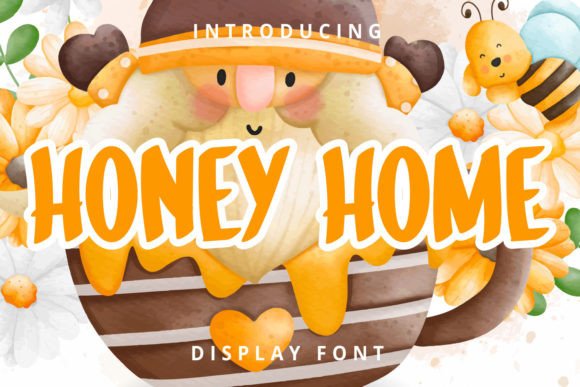
Honey Home: A Font That Brings Playful Warmth to Your Creations
There's a certain magic in designs that feel genuinely approachable—the kind that makes you smile before you even read the words. If you've been searching for a typeface that captures that lighthearted, handmade energy without sacrificing clarity, Honey Home deserves a spot on your shortlist. This display font carries a distinct personality: rounded letterforms, a gentle bounce, and the kind of warmth you'd expect from something sketched by hand on a lazy afternoon. It's the sort of creative font that doesn't try too hard, yet still manages to leave an impression.
What sets Honey Home apart from dozens of other playful typefaces floating around design marketplaces? It walks a careful line between whimsy and usability. Some handwritten fonts lean so far into their quirky aesthetic that they become impossible to read at smaller sizes. Others look charming in a showcase but fall apart in real-world applications. Honey Home avoids both traps. Its letter spacing is generous enough to keep words legible, and its character shapes stay consistent even when scaled down for subheadings or product labels.
Why Designers Keep Reaching for Handmade Display Fonts
The popularity of handwritten and hand-lettered typefaces isn't slowing down, and the reasons go beyond trend-chasing. In a digital landscape crowded with sleek sans serif font choices and polished geometric logos, a touch of imperfection feels human. People connect with things that look like they were made by another person, not spit out by an algorithm. That's precisely why fonts like Honey Home resonate so strongly across different industries.
Consider the brands you gravitate toward as a consumer. Chances are, at least a few use script font or handwritten elements in their visual identity—think artisan food brands, boutique children's clothing lines, independent bookshops, or local bakeries. These businesses aren't trying to compete with corporate minimalism. They're leaning into authenticity, and typography plays a massive role in communicating that vibe.
Honey Home fits naturally into this space. Its rounded, friendly letterforms suggest care and craftsmanship, which makes it particularly effective for businesses that want to signal approachability. A small-batch candle company, a children's party planning service, a pet grooming boutique—any brand built around warmth and personality can benefit from a display font that feels handcrafted.
Real-World Applications That Actually Work
Let's move beyond theory and talk about where this typeface genuinely shines. One of the most common uses for a font like Honey Home is logo design. A wordmark set in Honey Home immediately communicates a brand's personality before a single tagline is read. Pair it with a simple icon—maybe a small illustration of a bee, a honeycomb shape, or a leaf—and you've got a logo that feels cohesive and memorable without needing an expensive agency to produce it.
Packaging design is another arena where Honey Home pulls its weight. Picture a jar of homemade jam at a farmers' market. The label uses Honey Home for the product name, a clean sans serif for the ingredient list, and a warm cream background with a honey-yellow accent. That combination tells a story instantly. The customer doesn't need to read a single review to understand that this product is handmade, thoughtful, and worth trying. Typography does the heavy lifting.
Social media content creators will find plenty of uses here, too. Instagram stories, Pinterest pins, and TikTok overlays all benefit from fonts that pop without overwhelming the visual. Honey Home works beautifully for quote graphics, sale announcements, product highlights, and behind-the-scenes captions. Its playful energy catches the eye during a fast scroll, which is half the battle on platforms where attention spans are measured in fractions of a second.
Then there's the world of print materials: greeting cards, wedding invitations, baby shower announcements, birthday party flyers, and thank-you notes. Honey Home was practically designed for this category. Its cheerful character sets the right tone for celebrations and personal milestones. A birthday invitation set in this font feels festive before the guest even checks the date and time.
Getting the Most Out of Your Font Pairings
A display font rarely works in isolation. Even the most personality-rich typeface needs a partner to handle body text, captions, or secondary information. This is where font pairing becomes an essential skill, and it's worth spending a few extra minutes testing combinations before committing to a final design.
Honey Home's rounded, informal character pairs well with clean, neutral typefaces. A straightforward sans serif—think something like Montserrat, Open Sans, or Lato—creates a balanced contrast without competing for attention. The display font handles headlines and focal text, while the sans serif keeps longer paragraphs readable and grounded. This kind of pairing is a staple of modern typography because it works reliably across both digital and print formats.
For projects that need a slightly more traditional feel, a light serif font can also complement Honey Home. The key is choosing a serif with open letterforms and moderate contrast so the two typefaces don't clash visually. Avoid pairing it with another decorative or script font—that combination tends to look chaotic rather than intentional.
Always test your pairings at actual size. A font combination that looks balanced in a 200-pixel preview might feel cramped or disjointed when applied to a full-page layout or a mobile screen. Zoom in, zoom out, print a test page if you're working on physical materials. These small checks save revision time later.
Practical Tips for Using Honey Home in Brand Identity
If you're building or refreshing a brand identity, resist the temptation to use your display font everywhere. Overuse is one of the most common mistakes in editorial design and branding. When every headline, subheading, and call-to-action button uses the same playful typeface, the design loses its impact. The font stops feeling special and starts feeling noisy.
Instead, reserve Honey Home for moments where personality matters most: the primary logo, hero sections on a website, product packaging headers, or the opening title of a presentation. Let your secondary typeface handle the structural text. This approach creates visual hierarchy, which is the backbone of professional presentation and strong brand recognition.
Color choice matters just as much as font selection. Honey Home's handmade aesthetic pairs beautifully with warm, saturated palettes—think golden yellows, soft corals, muted greens, and dusty pinks. It also works surprisingly well against high-contrast backgrounds like deep navy or charcoal, where the lighter letterforms create a striking visual pop. Experiment with combinations that match your brand's existing color story rather than defaulting to safe neutrals.
For those working on digital products—think downloadable planners, educational worksheets, activity books for kids, or social media template bundles—Honey Home adds instant perceived value. A worksheet header set in a thoughtfully chosen premium font feels more polished than one using a default system typeface. Customers notice those details, even if they can't articulate why one design feels more professional than another.
Licensing and File Formats Worth Knowing
Before downloading any creative font for commercial use, take a few minutes to review the licensing terms. This step is easy to skip, especially when you're excited about a new design asset, but it protects you from headaches down the road. Most premium font licenses cover a specific range of uses—logos, merchandise, digital templates, printed materials—and may have restrictions on embedding or redistribution.
Honey Home typically comes with standard commercial font licensing that covers the applications most designers and small business owners need. That said, if you're planning to use it in a product you'll sell—like a template pack on Creative Market or a line of T-shirts—confirm that your license permits that specific use. A two-minute license review now prevents awkward emails later.
Pay attention to the file formats included with your download as well. OTF and TTF files cover most desktop design applications, while WOFF or WOFF2 formats are necessary for web design projects. If the package includes all of these, you're set for virtually any scenario. If it doesn't, you may need to convert formats or look for an extended version.
Small Details That Make a Big Difference
One often-overlooked aspect of working with display fonts is kerning and tracking adjustments. Even the best-designed typeface may need minor tweaks depending on the specific letters sitting next to each other in your headline. For example, certain letter combinations in handwritten fonts can create awkward gaps or tight spots. A quick manual kerning pass in your design software—whether that's Illustrator, Figma, Canva Pro, or Affinity Designer—tightens the final result and signals attention to detail.
Line height is another variable worth adjusting. Honey Home's slightly bouncy baseline benefits from a touch more leading than you might use with a geometric sans serif. Give the letters room to breathe, especially in multi-line headlines. Crowded text undermines the friendly, open feeling that makes this font appealing in the first place.
Finally, think about context. A typeface that feels perfect for a children's birthday invitation might not be the right choice for a corporate annual report—and that's completely fine. The goal isn't to find one font that does everything. It's to match your typography to your project's goals and audience expectations. Honey Home excels in spaces where warmth, creativity, and approachability matter. Lean into those strengths, and your designs will feel authentic rather than forced.
Whether you're designing a logo for a new small business, creating a set of social media graphics for a product launch, or putting together a printable card kit for your online shop, having a reliable, character-rich display font in your toolkit makes the creative process smoother. Honey Home offers that rare combination of visual charm and practical versatility—a typeface that looks good on screen, works in print, and connects with audiences who appreciate designs that feel genuinely human.