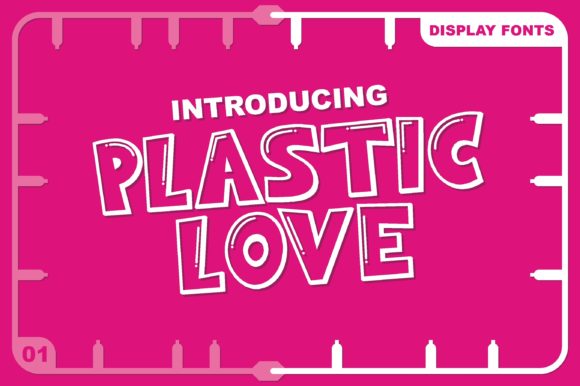
Plastic Love: The Cheerful Display Font for Bold, Creative Projects
There's something undeniably magnetic about a typeface that just feels alive. You know the one—it catches your eye from across the room, makes you smile before you've even read the words, and sticks in your memory long after you've scrolled past. That's the kind of energy Plastic Love brings to the table. This cheerful display font has a personality that's impossible to ignore, and if you've been searching for something that injects genuine warmth and character into your work, you might have just found your new favorite design asset.
Let's be honest: the font world is crowded. Thousands of typefaces compete for attention every single day, and most of them blend into the background noise. What sets a creative font apart isn't just how it looks in a specimen sheet—it's how it performs in real projects, under real deadlines, for real audiences. Plastic Love manages to strike a balance that's surprisingly rare. It's bold enough to command attention in a headline, yet approachable enough that people actually want to read what it says. That combination is harder to find than most designers care to admit.
Why This Typeface Works So Well for Visual Storytelling
Every font tells a story before a single word is processed by the brain. The curves, the weight, the spacing—all of these visual cues set a mood almost instantly. Plastic Love leans into a playful, retro-inspired aesthetic that feels simultaneously modern and nostalgic. Think of the typography you'd see on a vintage soda label or a 1970s concert poster, but cleaned up and refined for contemporary use. The letterforms have a bouncy rhythm to them, with rounded edges and a slightly condensed structure that gives text a sense of movement.
What makes this particularly useful for branding and logo design is that the font does a lot of the heavy lifting for you. A brand identity built around Plastic Love immediately communicates approachability, creativity, and a willingness to have fun. For small business owners—especially those in food and beverage, lifestyle, beauty, children's products, or creative services—this kind of instant personality read can save months of trying to establish tone through other design elements.
I've seen packaging design projects where the choice of typeface completely transformed the product's shelf presence. A hand-lettered script font might feel too casual for certain markets, while a traditional serif font can come across as stiff or dated. Plastic Love occupies that sweet spot: it's distinctive without being gimmicky, expressive without sacrificing clarity. On a label, a box, or a shopping bag, it draws the eye and invites closer inspection.
Putting Plastic Love to Work Across Your Projects
The versatility of a well-designed display font often surprises people. You might pick up Plastic Love thinking it's perfect for one specific use, and then realize it adapts beautifully to contexts you hadn't considered. Here's where I've seen this kind of typeface truly shine:
- Social media graphics: Instagram posts, Stories, Pinterest pins, and TikTok overlays all demand fonts that pop at small sizes and grab attention in fast-scrolling feeds. A cheerful display font like this one practically begs to be tapped on.
- Poster and flyer design: Event promotion, sale announcements, festival branding—anything that needs to communicate energy and excitement benefits from this kind of typographic voice.
- Invitations and greeting cards: Birthday parties, baby showers, wedding save-the-dates, holiday cards. The warmth inherent in the font's design makes it a natural fit for personal, celebratory communication.
- Merchandise and apparel: Tote bags, t-shirts, mugs, stickers. Product designers looking for a typeface that translates well to print-on-demand and screen printing will appreciate how well Plastic Love holds up at various scales.
- Editorial layouts and blog headers: Magazine spreads, blog post graphics, newsletter banners—anywhere you need a headline that feels inviting rather than corporate.
- Digital products: If you sell templates, worksheets, planners, or printable art, incorporating a premium font like this one into your designs adds perceived value and helps your products stand out in crowded marketplaces.
- Website design: While display fonts aren't typically used for body text, Plastic Love works wonderfully for hero sections, landing page headlines, and call-to-action buttons where personality matters more than paragraph-level readability.
Pairing, Testing, and Getting the Details Right
Here's a practical reality that every designer and content creator faces: a display font rarely works in isolation. The magic happens in how you pair it with other typefaces. Plastic Love's bold, expressive character means it benefits from being balanced with something quieter—a clean sans serif font for body copy, or a simple serif font for secondary headings. The contrast creates visual hierarchy and keeps your layouts from feeling overwhelming.
When testing font pairings, I always recommend setting real content, not just "Lorem ipsum" placeholder text. Type out an actual headline you'd use. Write a real paragraph of body copy next to it. Look at the combination on screen and in print if possible. Does the display font overshadow everything else? Does the body text feel too plain by comparison? The goal is harmony—each typeface should have a clear role, and together they should guide the reader's eye naturally through your layout.
Readability deserves special attention with any display typeface. Plastic Love is designed to be legible at larger sizes, but context matters. If you're using it for a poster viewed from ten feet away, test it at that scale. If it's going on a website header viewed on a mobile screen, check how the letterforms render at smaller pixel sizes. A font that looks gorgeous at 72 points might lose some of its charm at 24 points, and vice versa. This kind of testing isn't glamorous, but it separates professional-looking work from amateur output.
Licensing, File Formats, and the Business Side of Fonts
One topic that doesn't get enough attention in creative communities is font licensing. If you're using Plastic Love—or any commercial font—for client work, merchandise you sell, or digital products you distribute, you need to understand what the license permits. Most premium fonts come with a desktop license that covers personal and commercial use in static designs. However, if you're embedding the font in a website, app, or digital product that allows end users to create their own text, you may need an extended or web license.
This isn't legal advice, and specific terms vary from foundry to foundry, but the principle is simple: read the license agreement before you commit to a font for a major project. It's a small step that prevents big headaches down the road, especially if a client asks about the commercial font rights for a logo or brand identity you've designed for them.
Also worth noting: check what file formats and styles are included with your purchase. A quality display font often ships with multiple weights, alternates, ligatures, or stylistic sets that give you additional creative flexibility. Exploring these extras can unlock design possibilities you didn't initially consider—maybe an alternate ampersand perfectly suits your logo, or a set of stylistic alternates gives your social media graphics a slightly different flavor for each post.
Making Typography a Strategic Design Choice
The most effective design decisions aren't purely aesthetic—they're strategic. Choosing Plastic Love for a project isn't just about liking how it looks (though that matters). It's about asking whether the font's personality aligns with your audience, your message, and your goals. A playful, energetic typeface is a terrible match for a law firm's annual report, but it's an outstanding choice for a children's clothing brand, a podcast about pop culture, or a bakery that wants to feel warm and welcoming.
Visual consistency across your brand identity depends heavily on typography. When you commit to a typeface and use it deliberately across your logo, website, packaging, social media graphics, and print materials, you build recognition. People start to associate that visual style with your business before they even read the words. That's the power of thoughtful font selection—it becomes part of your brand's visual language.
For entrepreneurs and content creators especially, investing in a quality creative font is one of the highest-return design decisions you can make. It's relatively inexpensive compared to a full rebrand, it's immediately usable across multiple platforms, and it has a cumulative effect on how professional and cohesive your work appears. Whether you're designing your own materials or handing assets off to a designer, starting with the right typeface gives everyone a stronger foundation to build on.
Plastic Love isn't just another cheerful display font sitting in a download folder. Used thoughtfully, it becomes a design tool that shapes how people perceive your work—and that's worth paying attention to.