Quick Monster: Injecting Playful Energy into Your Creative Projects
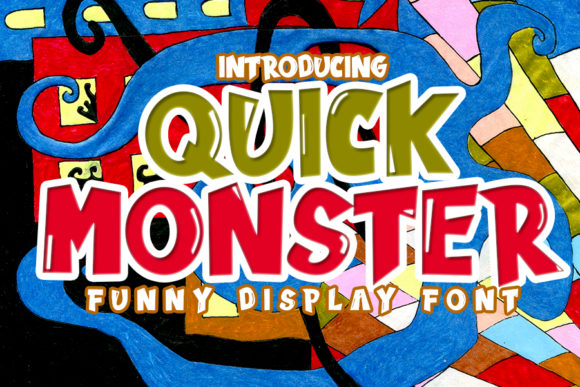
There is a specific kind of magic that happens when a design stops taking itself too seriously. We have all seen the sleek, corporate sans-serifs and the elegant, traditional serifs that dominate the professional landscape. They have their place, certainly, but when the goal is to spark joy, evoke nostalgia, or simply make someone smile, those standard choices often fall flat. This is where the personality of your typography takes center stage. Enter Quick Monster, a display typeface that doesn't just occupy space on the canvas—it dances across it. It captures that elusive childlike wonder and bundles it into a functional, high-quality digital asset that transforms a standard layout into something truly memorable.
The Psychology of Playful Typography
Why does a font matter so much? In the world of visual communication, typography is the voice of your design. If you are a small business owner, a content creator, or a designer, you know that the "voice" needs to match the message. Quick Monster is the typographic equivalent of a friendly, enthusiastic greeting. Its rounded edges and bouncy baseline suggest approachability and fun, making it an instant mood-lifter for any project it touches. It is not just about looking "cute"; it is about psychological connection. Consumers and readers are drawn to visuals that feel human and spirited. When they see a font like this, they subconsciously associate the brand with positivity and creativity.
This type of display font is designed specifically for headlines and short bursts of text where personality is paramount. It is not meant to replace a serif font or a sans serif font for long-form body copy; rather, it acts as the exclamation point of your design system. Think of it as the spice in a recipe—used correctly, it elevates the entire dish.
Practical Applications: From Screen to Print
The versatility of a creative font like this lies in its ability to adapt to various mediums while maintaining its core identity. Whether you are working on a digital-first campaign or a tangible product, the Quick Monster typeface serves as a reliable tool for grabbing attention.
Branding and Logo Design
For startups, particularly those in the education sector, children's entertainment, pet care, or casual food and beverage industry, a logo needs to be inviting. A logo design utilizing Quick Monster immediately communicates that the brand is fun and accessible. It strips away the intimidation factor that rigid corporate fonts can sometimes create. If you are an entrepreneur launching a new product line for a younger demographic, this font style helps establish an immediate visual rapport.
Packaging and Merchandise
Walk down a grocery aisle or a toy store, and you will notice that the products that pop are the ones with bold, energetic typography. Packaging design is about shelf impact. Using this typeface for product headers or call-outs on packaging can differentiate your item from competitors using standard block letters. Furthermore, for merchandise—think t-shirts, tote bags, or stickers—Quick Monster offers that trendy, hand-drawn aesthetic that is currently dominating the market. It feels personal and artisanal, even though it is a digital file.
Digital Assets and Social Media
In the fast-scrolling environment of Instagram, TikTok, or Pinterest, you have milliseconds to capture a user's attention. Social media graphics require high-contrast, high-personality elements. This font works exceptionally well for overlaying text on photos or creating standalone announcement graphics. It brings a level of energy that static, standard fonts lack. For web design, it can be used sparingly in hero sections or navigation bars for lifestyle blogs to inject personality without sacrificing the site's overall navigability.
Editorial and Print Materials
Don't limit this style to just digital use. In editorial design, such as school yearbooks, children's books, or magazine spreads focusing on family lifestyle, Quick Monster serves as a fantastic tool for pull quotes or section headers. It breaks the monotony of text-heavy pages. Similarly, for print materials like flyers for a community event, birthday invitations, or posters for a local fundraiser, the font adds a layer of festivity and excitement that formal fonts simply cannot replicate.
Strategic Font Pairing and Readability
One of the most common mistakes in design is using a premium font incorrectly. Because Quick Monster is a display font, it has a lot of visual character. If you use it for everything, your design will look cluttered and difficult to read. The key to professional presentation is font pairing.
The rule of contrast applies here. Because the monster font is whimsical and bold, it pairs best with a clean, neutral background typeface. Consider pairing it with a geometric sans serif font for body text. The simplicity of the sans serif will allow the headlines written in Quick Monster to shine without competing for attention. Alternatively, for a more organic feel, a simple handwritten font that is less decorative than the headline font could work for sub-headers, though caution is advised to ensure the text doesn't become too "messy" looking.
When testing your pairings, always check for readability. This involves checking the kerning (space between letters) and leading (space between lines). While the font is designed to be legible at various sizes, it is optimized for larger text. Use it for headers, titles, and short call-to-actions. For long paragraphs or legal disclaimers, always revert to a standard serif or sans serif typeface to ensure your audience can consume the information easily.
Aligning Typography with Brand Goals
Choosing a typeface is a business decision as much as an aesthetic one. It contributes directly to your brand identity. If your brand voice is authoritative, serious, and traditional, Quick Monster might not be the right fit. However, if your brand values include creativity, inclusivity, fun, and youthfulness, this font becomes an invaluable design asset.
Consider the user experience. A parent looking for a tutoring service wants to see a font that suggests learning can be fun, not rigid. A customer buying a birthday gift wants to see packaging that feels celebratory. By aligning your typography with these emotional goals, you improve audience engagement. People are more likely to stop and read a poster that looks fun than one that looks like a tax document.
Technical Considerations and Licensing
Before you download and start creating, it is essential to review the technical aspects of the file. A high-quality typeface usually comes with various styles—perhaps a bold version, an outline, or a set of alternates and ligatures. Review the included font styles to see if there are unique characters that can add flair to your project, such as special swashes or icons.
Crucially, you must understand the licensing. If you are working on a client project, selling digital products, or putting the design on merchandise for sale, you need a commercial font license. Always check the terms of use. Most premium fonts require a specific license for "print-on-demand" or merchandise sales. Ensuring you have the correct license protects you legally and supports the type designers who create these modern typography tools.
Final Thoughts on Creative Execution
Ultimately, the goal of using a font like Quick Monster is to inject life into your work. It is a tool for storytelling. Whether you are a graphic designer working on a client brief, a small business owner designing your own flyers, or a hobbyist making scrapbook pages, the right font bridges the gap between a blank canvas and a finished piece of art. Don't be afraid to experiment. Mix it with bold colors, place it over textured backgrounds, and let it be the voice that shouts "fun" in your next project. When used with intention, this enchanting typeface turns a simple idea into a standout visual experience.