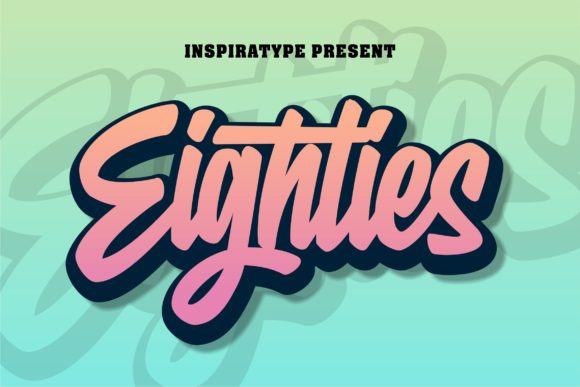
Why the Eighties Typeface Is Your New Secret Weapon for Retro Design
There’s a certain feeling you get when you look at a design that perfectly captures the vibe of a bygone era. It’s not just about looking old; it’s about channeling a specific energy, a mood, a cultural moment. For designers, creators, and business owners aiming to inject that powerful dose of nostalgia into their work, the search for the right visual language often leads to typography. And if you’re chasing that iconic, vibrant, and slightly rebellious spirit of the 1980s, a font like Eighties isn’t just another asset in your toolkit—it’s a time machine for your text.
At its core, Eighties is a beautifully crafted display font that understands the assignment. It doesn’t just mimic the past; it interprets it with a designer’s eye. The letterforms are bold and confident, with just enough stylistic flair to feel authentically retro without sacrificing modern clarity. Think of the typography on classic movie posters, mixtape covers, or neon-lit arcade signage. That’s the territory we’re in. The strokes have a purposeful weight, the curves feel dynamic, and the overall character set is designed to make a statement. This isn’t a subtle, whispering serif font; it’s a creative font built for headlines, logos, and any project where the typography itself needs to tell a story and create immediate emotional resonance.
More Than Nostalgia: Practical Applications for a Distinctive Typeface
So, where does a font with this much personality actually work? The answer is surprisingly versatile. Its strength as a display font means it’s not meant for body text, but for the moments where you need to grab attention and set a tone instantly. For branding and logo design, Eighties can become the cornerstone of a brand identity for a retro-themed café, a synthwave music producer, a vintage clothing line, or a tech company wanting to nod to the dawn of the digital age. A well-chosen typeface like this does half the branding work for you, communicating history and attitude before a customer reads a single word of your mission statement.
Beyond logos, its applications are vast. In packaging design, imagine it on a craft beer label, a snack bag, or a beauty product box—it instantly tells a story and stands out on a crowded shelf. For social media graphics and digital content, it’s a powerhouse. Use it for YouTube channel art, Instagram story headings, podcast cover art, or TikTok text overlays to create a consistent, recognizable visual thread that followers will associate with your content. The font’s inherent energy translates perfectly to the fast-paced digital space, helping improve audience engagement by making your posts visually arresting in a scrolling feed.
Print is far from dead for this typeface. It shines on posters, flyers, and event invitations, especially for concerts, themed parties, or retro-themed markets. For merchandise like t-shirts, tote bags, and stickers, a bold display font is essential, and Eighties delivers that retail-ready punch. Even in more traditional editorial layouts—think magazine feature headers or chapter titles in a book—a well-placed retro font can add a layer of visual interest and break the monotony of standard typography, guiding the reader’s eye and enhancing the overall professional presentation of the publication.
Building a Cohesive Look: Pairing and Practicality
Introducing a strong character font like Eighties into a project requires a bit of strategy to ensure it enhances rather than overwhelms. The key is understanding its role. It’s the star of the show for headlines and short, impactful text. For longer descriptions, body copy, or supporting information, you’ll need a partner. This is where font pairing becomes crucial.
A classic and safe approach is to pair your expressive display font with a clean, neutral sans serif font or a timeless, highly readable serif font. The contrast creates a visual hierarchy: the Eighties font draws the eye and establishes the mood, while the supporting font ensures the message is delivered clearly and comfortably. Avoid pairing it with another highly stylized font, like an ornate script font or a busy handwritten font, as this can create visual chaos and hurt readability. Always test your pairings in context—see how they look together in a mockup of your website header, your business card, or your social media post.
Speaking of readability, it’s a non-negotiable consideration. Because Eighties is a display typeface, its intricate details are best appreciated at larger sizes. Using it for fine print or lengthy paragraphs would be a mistake, both for legibility and for preserving its impact. Think of it as a spice; a little elevates the dish, but too much overpowers everything else. Review the full character set of the font you purchase. Does it include all the punctuation, numerals, and special characters you’ll need for your commercial font projects? A comprehensive premium font will often include multiple stylistic alternates or ligatures, giving you more creative control.
From Concept to Commercial: Making It Work for You
For the entrepreneur or small business owner, the decision to invest in a design asset like a premium typeface comes down to value. Does it solve a problem? Does it help you communicate more effectively? Does it contribute to a brand identity that feels unique and memorable? A font like Eighties answers yes to all three if your brand or project aligns with its aesthetic. It provides visual consistency across all your touchpoints—from your web design to your marketing assets—creating a unified and professional look that builds recognition and trust.
Before you commit, get hands-on. Most reputable font marketplaces offer previews or even trial versions. Type out your business name, a key slogan, and a few headlines you’d actually use. See how the letters interact. Does the spacing feel right? Does the overall shape of your words look balanced and appealing? This practical testing is worth more than any description.
Finally, a note on licensing. When you purchase a font for commercial use, you’re buying the right to use it in projects that generate revenue. Always read the license agreement. Understand if it covers the number of users, the types of projects (e.g., print, digital, merchandise), and any limitations. A clear, straightforward commercial license is a hallmark of a professional font foundry and protects both you and the creator.
In the end, typography is one of the most powerful tools in visual communication. It’s the voice of your design. Choosing a typeface like Eighties is a deliberate decision to speak in a voice that’s bold, nostalgic, and full of character. It’s not for every project, but when it fits, it doesn’t just decorate a design—it defines it, helping you connect with an audience that appreciates style with a story. When used thoughtfully, it’s the kind of asset that can truly elevate your creative output from good to unforgettable.