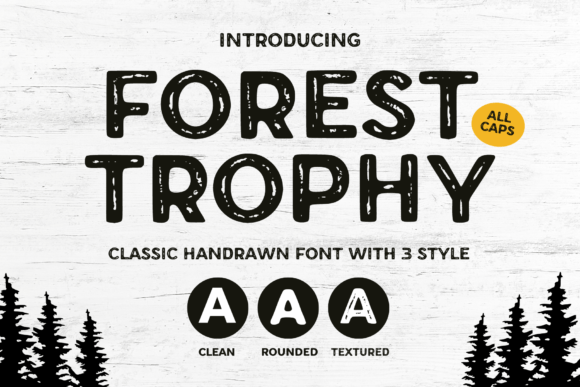
Forest Trophy: A Typeface That Captures the Spirit of the Outdoors
There's a certain feeling you get when you're deep in the woods, or standing on a mountain ridge after a long hike. It's a mix of ruggedness, authenticity, and a connection to something timeless. Translating that feeling into a design project—a logo for a new trail mix brand, a poster for a local adventure race, or the label for a craft brewery—is a challenge many creators face. You need a visual element that doesn't just say "outdoors," but feels like it. This is where the right typeface becomes a powerful tool, and Forest Trophy is a compelling example of a font that embodies this natural, textured spirit.
More Than Just a Font: Capturing a Vintage, Textured Aesthetic
At its core, Forest Trophy is a classic display font, but that simple label doesn't do it justice. Its defining characteristic is a subtle, rough texture that mimics the look of worn wood, old signage, or weathered stone. This isn't a sterile, perfect digital font; it has personality baked right into its letterforms. The serifs are sturdy and confident, giving it a traditional, almost foundational feel, while the texture adds a layer of organic warmth and history. It’s the kind of typography you might see on a vintage national park poster or etched into a rustic lodge sign. This inherent character makes it a standout choice for projects where you want to evoke a sense of heritage, adventure, and authenticity without resorting to clichés.
The appeal lies in its balance. It’s bold enough to command attention as a headline font, yet detailed enough to hold interest up close. For designers and business owners, this means you can use it to create a strong first impression that also rewards a second look. It speaks directly to an audience that values quality, craftsmanship, and a connection to nature—whether that’s for outdoor apparel, artisanal goods, or event marketing.
Practical Applications: From Brand Identity to Social Media
The true test of any premium font is its versatility across real-world projects. Forest Trophy’s classic yet rugged style lends itself to a wide range of creative applications, helping to build a cohesive and memorable brand identity.
- Logo Design & Branding: This is where Forest Trophy truly shines. A logo sets the tone for your entire brand. Using this typeface for an outdoor gear company, a camping supply store, or a sustainable clothing line instantly communicates values of durability and tradition. Pair it with a clean sans-serif font for body text to create a balanced, professional brand system.
- Packaging & Labels: Imagine a coffee bag for a "Summit Roast" blend or a label for a small-batch hot sauce with a "Wilderness" theme. The textured letters of Forest Trophy add a tactile, artisanal quality to packaging design, suggesting the product inside is crafted with care and has a story to tell.
- Posters & Event Marketing: For music festivals, trail races, farmers' markets, or community events, this font grabs attention. It sets a vibe that’s both welcoming and energetic, perfect for posters, flyers, and digital banners that need to stand out in a crowded feed.
- Merchandise & Apparel: T-shirts, hats, and tote bags are walking billboards. A strong, textured font like this ensures your merchandise looks intentional and stylish. It’s ideal for creating designs that feel vintage yet timeless, appealing to customers who want to wear their interests.
- Digital Presence: While best suited for headlines, Forest Trophy can add a powerful punch to website headers, blog post titles, and social media graphics. It helps create visual consistency between your physical products and your online presence, strengthening brand recognition. Use it for the title of a travel blog or the header on a homepage for an adventure tour company.
Choosing and Pairing Your Typography
Selecting the right font is a strategic decision. It’s not just about what looks cool, but what aligns with your project’s goals and audience. Ask yourself: What story am I trying to tell? Who am I trying to reach? Forest Trophy is perfect for narratives involving heritage, nature, craftsmanship, and adventure. It’s less suited for a tech startup or a luxury minimalist brand, where a sleek sans-serif might be more appropriate.
A critical step in using any display font effectively is font pairing. Because Forest Trophy has such a strong personality, it works best when balanced with a simpler, more neutral companion. Think of it as the lead singer and the rhythm section.
- Pair with a Clean Sans-Serif: Fonts like Montserrat, Lato, or Open Sans provide excellent contrast. Use Forest Trophy for your main headline or logo, and the sans-serif for subheadings and body copy. This ensures readability while letting the display font make its statement.
- Consider a Simple Serif: For a slightly more traditional but still readable combination, pair it with a straightforward serif like Merriweather or Georgia. This can work well for editorial layouts, book covers, or menus for a rustic-themed restaurant.
- Test Extensively: Always create mockups before finalizing. Place your headline and body text together at different sizes. Check how it looks on a mobile screen versus a printed poster. Readability is paramount—ensure the textured letters remain clear, especially at smaller sizes.
Final Thoughts for Your Creative Toolkit
When you invest in a quality typeface like Forest Trophy, you’re adding a versatile design asset to your toolkit. It’s a creative font that can help solve specific branding challenges, especially for projects that need to convey authenticity and a rugged charm. Remember to review the full character set and any included font styles—sometimes there are alternate letters or ligatures that can add extra flair to your design.
Finally, a practical note on commercial licensing. If you’re using the font for a client project, merchandise for sale, or any commercial enterprise, ensure you have the correct license. This protects both you and the font designer, and it’s a professional standard that supports the creative community. The right typography does more than make words visible; it shapes perception, builds trust, and creates an emotional connection. By choosing a typeface with a distinct personality that aligns with your vision, you’re not just designing—you’re communicating on a deeper level.